

[fr] Diagnostic et recommandations pour la mise en place d’une économie circulaire des plastiques
Vers une économie circulaire des plastiques au Québec et au Canada
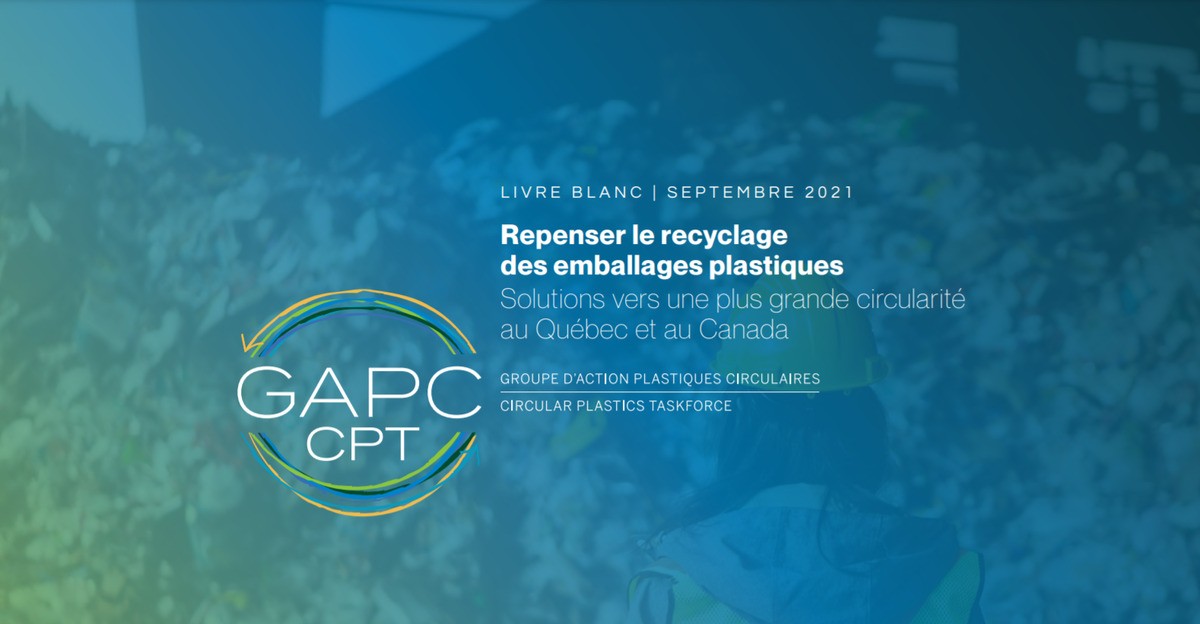
La Phase 1 complétée du projet du groupe d’action plastiques circulaires (GAPC) pour soutenir l’économie circulaire des plastiques résulte en un Livre Blanc aujourd'hui rendu disponible.
Les travaux du GAPC ont notamment démontré la pertinence de mobiliser les acteurs de l’industrie et le grand potentiel résidant dans une meilleure adéquation entre le marché et les autres acteurs de la chaîne de valeur.
La demande pour les plastiques recyclés va en augmentant, ce qui n’est pas le cas pour l’offre de ces matières. Une refonte de la chaîne de valeur serait donc essentielle. Il faudrait maximiser la captation des différents types de plastiques dans le ballot adéquat, en fonction des spécificités propres à chaque résine. Il serait aussi important de s’attarder à l’enjeu des rejets pour les conditionneurs, de promouvoir l’usage de résine recyclée et de la rendre accessible pour soutenir le développement de marchés locaux dynamiques.
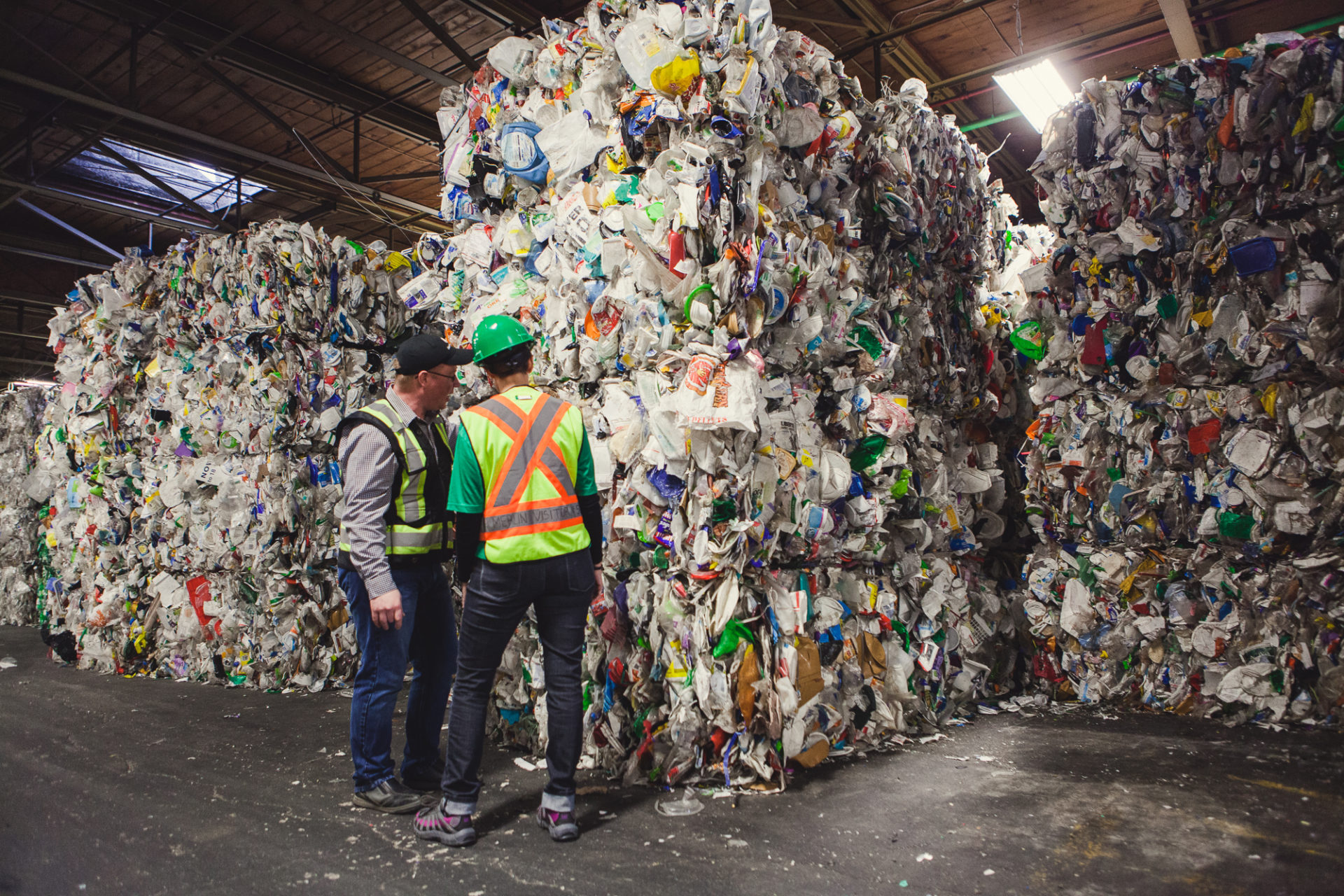
CPT collaborates with food industries to create circular economy for plastics
The Circular Plastics Taskforce (CPT) has completed the first phase of its efforts to implement a circular economy for plastics in Quebec and Canada.
Officially launched in 2020, the CPT is a collaborative effort of organizations interested in finding concrete solutions to improve the management of post-consumer plastics. It brings together five major food, beverage and packaging companies in Canada (Cascades, Danone Canada, Dyne-a-pak, Keurig Dr Pepper Canada and TC Transcontinental), the Chemical Industry Association of Canada (CIAC) and Éco Entreprises Québec (ÉEQ). The first phase of the CPT’s project was completed with the financial support of Environment and Climate Change Canada and ÉEQ, and the active support of several public and private organizations.
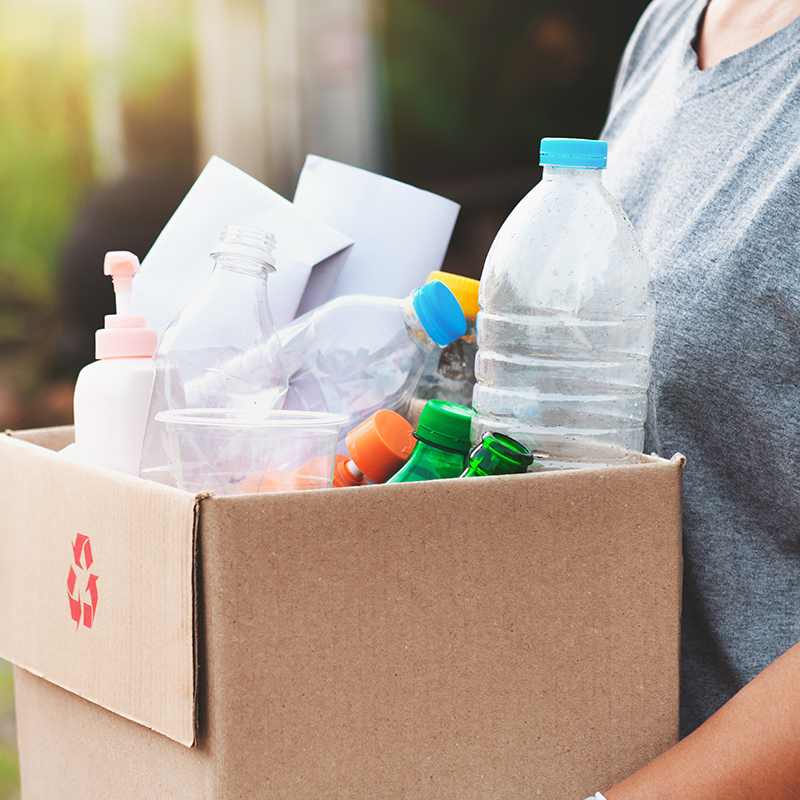
Hanes: Recycling more plastics isn't easy but it's doable, industry group says
People in good faith toss empty containers in their recycling bins in the belief that these materials will be refashioned into new packaging materials. But for glass and plastics in particular, that’s just not the case. Though much attention has been paid in recent years to the huge volume of glass needlessly ending up in landfills, the record for plastics isn’t much better. Only about a quarter of the plastic waste sent off to be recycled ends up being repurposed. After China closed its doors to plastic exports, a lot of what can’t be triaged locally is just discarded, taking centuries to decompose.
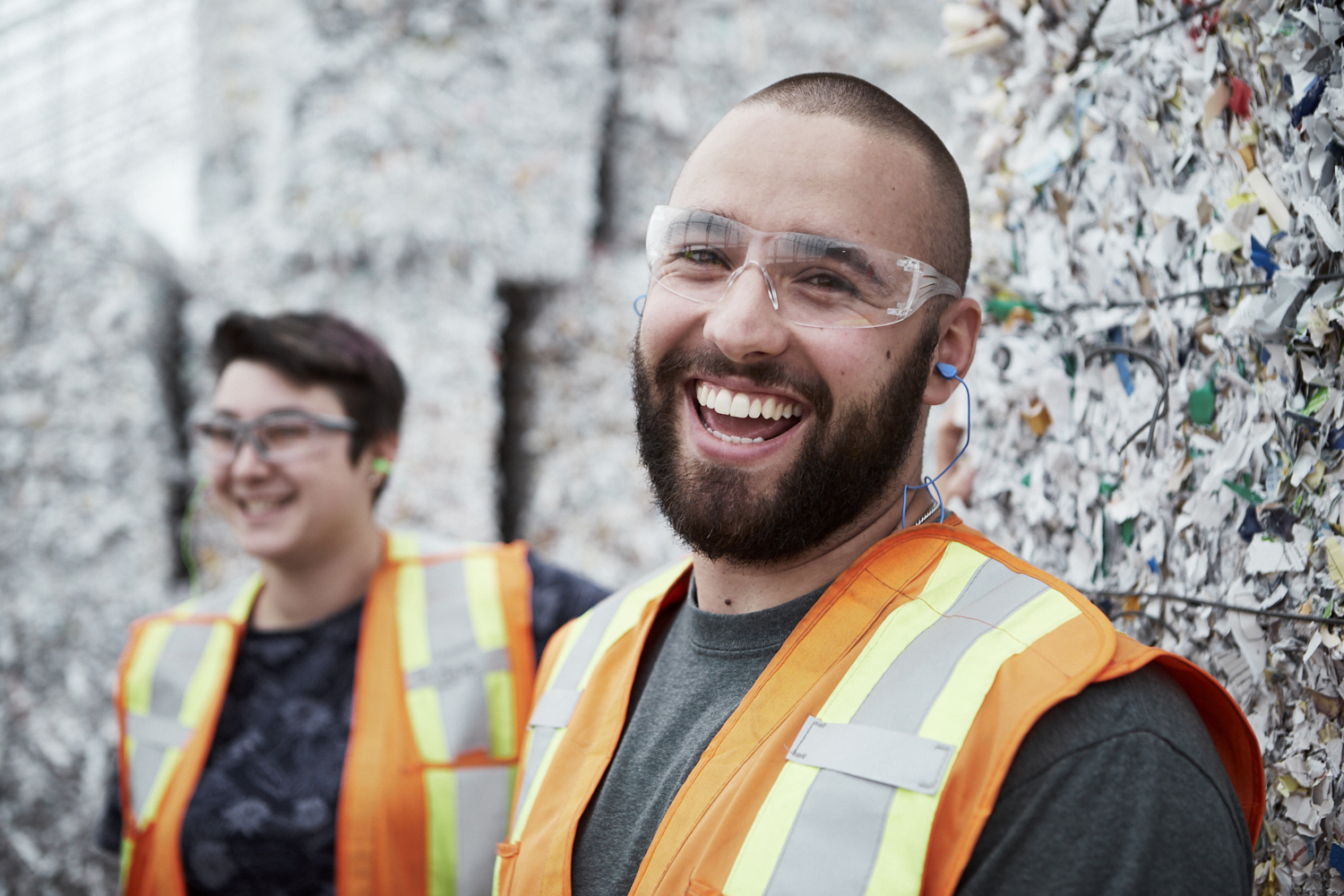
[fr] Circularité des plastiques au Québec: le GAPC clôt la Phase I de son projet d’envergure
Le Groupe d’action plastiques circulaires (GAPC) est une initiative née en 2020 qui unit cinq entreprises importantes des secteurs de l’alimentation, des boissons et de l’emballage (Cascades, Danone Canada, Dyne-a-pak, Keurig Dr Pepper Canada et TC Transcontinental) ainsi que l’Association canadienne de l’industrie de la chimie et Éco Entreprises Québec. Dans le cadre de la première phase de son projet, le GAPC a élaboré une cartographie de la chaîne de valeur des plastiques dans l’objectif de mettre en lumière les principaux défis, d’identifier certaines pistes d’optimisation susceptibles d’y remédier et de les mettre à l’épreuve par le biais d’essais de simulation.
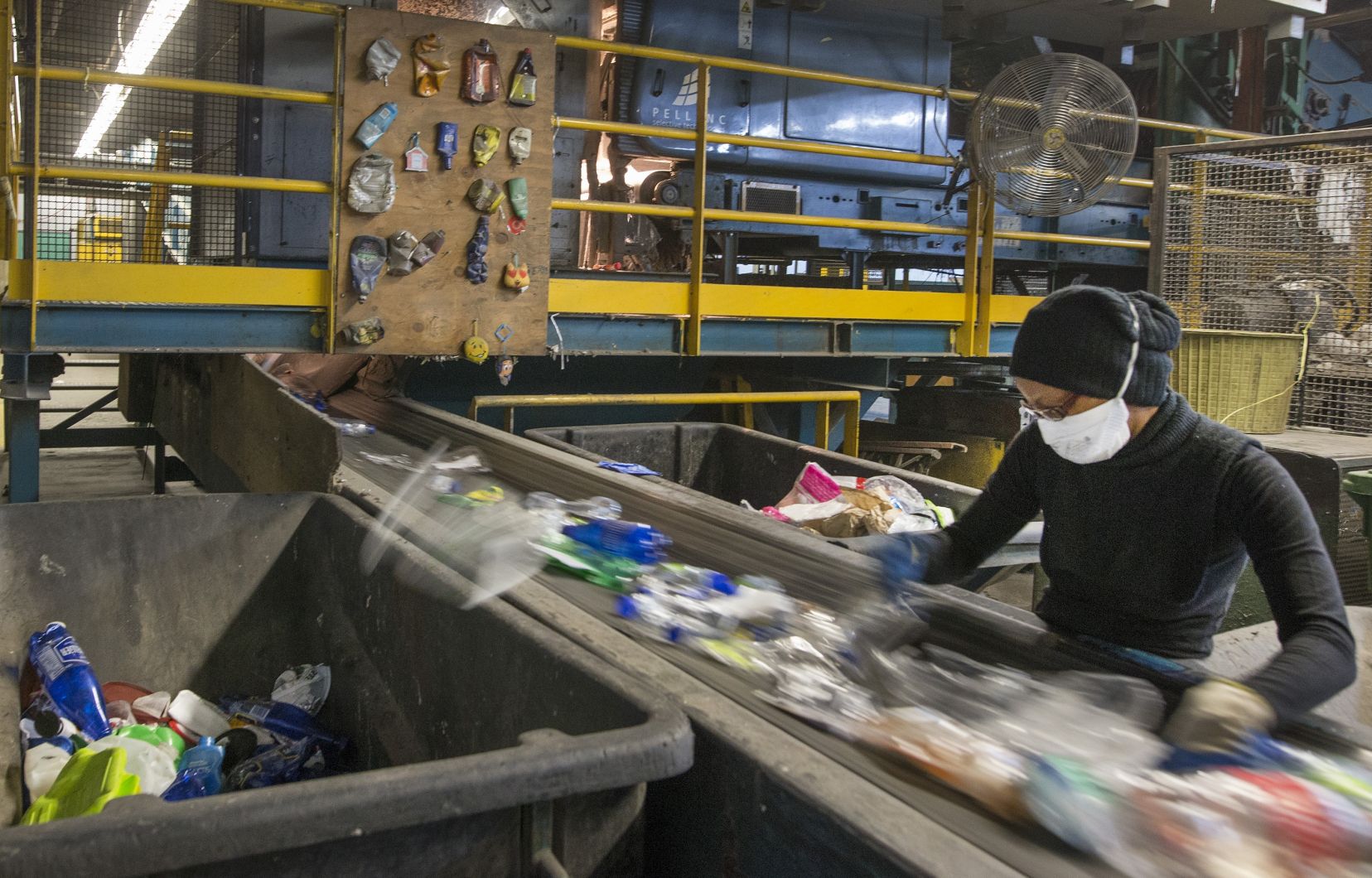
[fr] Les géants canadiens de l’emballage veulent des déchets de plastique mieux triés
Non, ces bananes emballées qu’on voit à l’épicerie ne vont pas disparaître. Mais une poignée d’industriels canadiens, principalement du secteur alimentaire, croient qu’en triant un peu mieux les déchets de plastique, il serait possible de réduire substantiellement la pollution engendrée par leurs emballages.
The circular plastics taskforce completes phase I of its major initiative in support of a circular economy for plastics
MONTRÉAL (Québec), September 27th, 2021
The Circular Plastics Taskforce (CPT) has completed the first phase of its efforts to implement a circular economy for plastics in Quebec and Canada.
Officially launched in 2020, the CPT is a collaborative effort of organizations interested in finding concrete solutions to improve the management of post-consumer plastics. It brings together five major food, beverage and packaging companies in Canada (Cascades, Danone Canada, Dyne-a-pak, Keurig Dr Pepper Canada and TC Transcontinental), the Chemical Industry Association of Canada (CIAC) and Éco Entreprises Québec (ÉEQ). The first phase of the CPT’s project was completed with the financial support of Environment and Climate Change Canada and ÉEQ, and the active support of several public and private organizations.
Phase I: Mobilize Industry Players
The objective of Phase I was to conduct a detailed mapping of the value chain of the plastics recycling industry in Québec, to determine market needs and to establish optimization hypotheses aimed at achieving the required specifications, following a reverse engineering approach.
The work completed in this first phase consisted of five activities:
- Establishing an understanding of the situation in consultation with stakeholders;
- Analyzing potential markets;
- Establishing a profile of processors, recyclers and sorting centres;
- Developing a report, findings and recommendations, and;
- Setting up and carrying out simulation tests to validate the potential of the identified optimization paths.
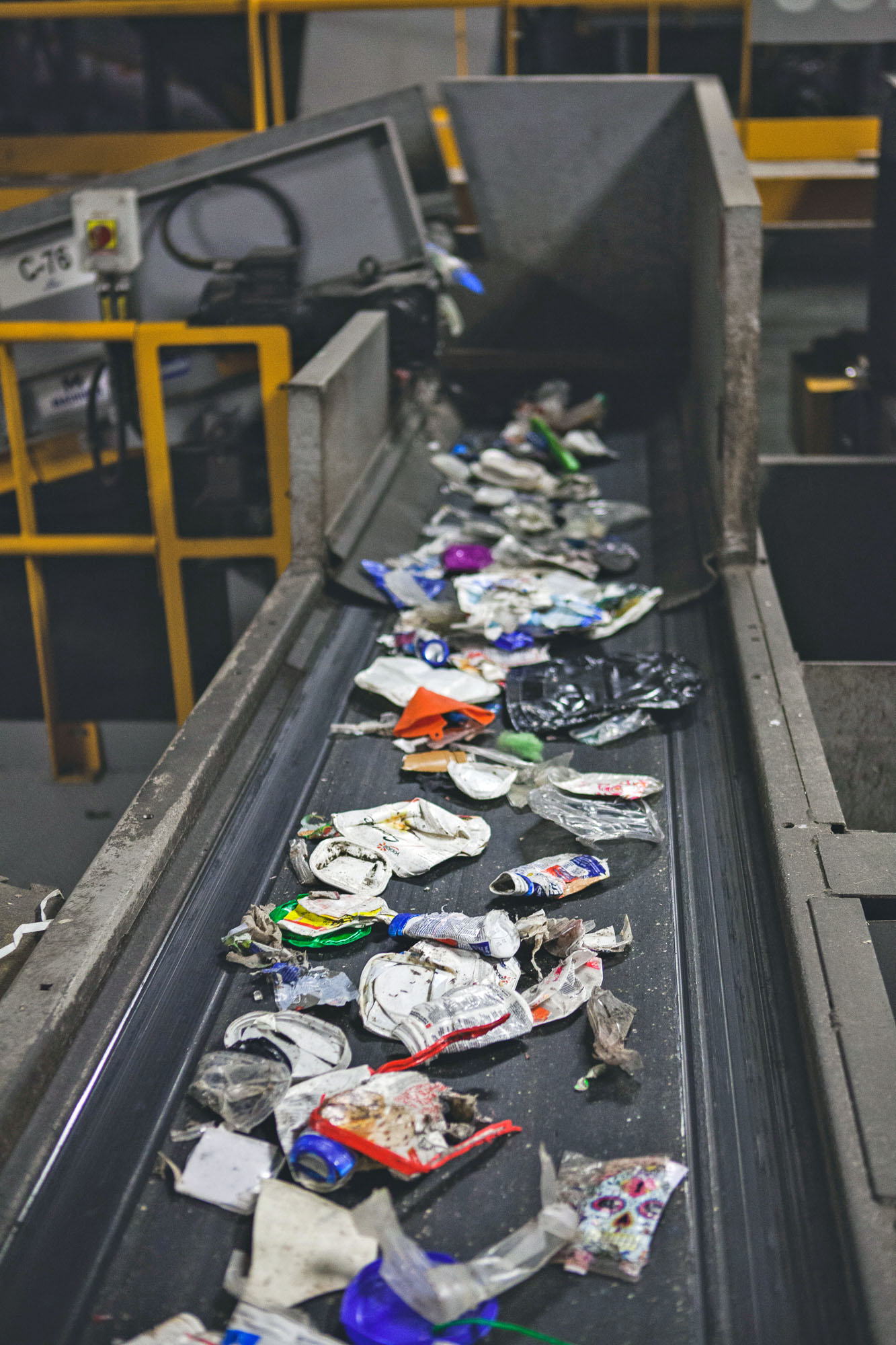
Among the findings of Phase I and summarized in the White Paper launched today by the CPT, the work has demonstrated the relevance of mobilizing industry players and the opportunity created through better alignment of the market with other players in the value chain. There is a growing demand for recycled plastics, but it is not aligned with supply. A redesign of the value chain will therefore be essential, especially to maximize the collection of the different types of plastics in the right bale, according to the specifications of each resin. Finally, it will be important to address the important issue of residuals for plastic processors, to promote the use of recycled resin and to make it accessible (volume/quality) to support the development of dynamic local markets.
"Phase I allowed us to see that there are major challenges, but the opportunities and potential benefits are just as great. The findings will allow us to identify and implement concrete pilot projects in the short term. Our goal is that all plastics be recycled locally and that a solid market for recycled resins be established domestically. This project demonstrates that close collaboration between industry players and end markets can be beneficial and contribute to building a circular economy for plastics in Canada," said the CPT steering committee.
Phase II to begin in Fall 2021: Deploying Concrete Solutions for Immediate Impact
The second phase of the CPT initiative will begin in Fall 2021. It will include the implementation of several pilot projects in sorting centres and at processing sites to quickly and concretely improve the quality of outgoing materials and the recycling rate of all plastic packaging. The goal is to enable the expansion of end markets for recycled plastics, within the context of extended producer responsibility’s (EPR) modernized curbside collection. The CPT is positioning itself as a catalyst for change towards the implementation of a circular economy for plastics.
To consult the complete white paper with the results of Phase I, click here.
Quotes
"The CPT’s efforts are in line with ÉEQ's ambition to build an optimal curbside collection system where the recovered materials are recycled as locally as possible. We are confident that the Quebec EPR curbside collection combined with the next phases of the CPT’s work will lead to a successful circular economy for plastics. "
- Maryse Vermette, CEO, Éco Entreprises Québec
As a member of the advisory committee, we are very pleased to be able to contribute our expertise to help the industry develop an overall vision of a true circular economy for plastics. The integration of a set of circular economy strategies, such as reduction at source, eco-design, reuse or the implementation of industrial symbiosis, in which one's waste becomes another's resources, can have significant positive impacts on the environment and Quebec’s economy.
- Sonia Gagné, CEO of Recyc-Québec
About the Circular Plastics Taskforce
The CPT’s objective is to promote the implementation of a circular economy for post-consumer plastics in Quebec and Canada. The CPT aims to improve the alignment between end markets' needs for recycled resins and the recycling value chain by identifying and implementing concrete optimization solutions that can be deployed in the short and medium term. The founding members of the CPT are Cascades, Danone Canada, Dyne-a-pak, Keurig Dr Pepper Canada, TC Transcontinental and the Chemical Industry Association of Canada (CIAC). ÉEQ joined the CPT Steering Committee in 2021.
About Cascades
Founded in 1964, Cascades offers sustainable, innovative and value-creating solutions in packaging, hygiene and recovery. The company employs more than 11,700 women and men in 85 operating units located in North America and Europe. Its management philosophy, its half-century of experience in recycling, and its sustained efforts in research and development are all strengths that enable it to create innovative products for its customers while contributing to the well-being of people, communities and the planet. Cascades' shares are traded on the Toronto Stock Exchange under the symbol CAS.
About Danone Canada
Danone Canada is a business unit of Danone and operates from head offices in Boucherville, Quebec, and Mississauga, Ontario. Danone Canada is the country’s largest consumer-facing Certified B Corporation®, demonstrating that the company meets the highest standards of social and environmental performance, accountability, and transparency. Danone Canada’s ambition is to produce healthful dairy, plant-based products and coffee creamers and beverages, create economic and social value, and nurture natural ecosystems through sustainable agriculture. Its portfolio of brands includes Activia®, Oikos®, DanActive®, Danone®, Silk® plant-based foods and beverages, So Delicious® Dairy Free, StokTM, International DelightTM and more.
For more information about Danone Canada, visit www.danone.ca, facebook.com/danonecanada, Twitter (@DanoneCanada) or LinkedIn (Danone).
About Dyne-a-Pak
Dyne-a-pak inc. is a division of Proampac LLC, a leading global flexible packaging company with comprehensive product offerings, who provides creative packaging solutions, industry-leading customer service and award-winning innovation to a diverse global marketplace.
In particular, the Dyne-a-Pak division is a leader in rigid packaging used for meat, poultry, fish and fruit and vegetables.
Our environmental commitment is reflected in constant efforts to reduce the ecological impact of our products, by the use of recycled content in all our polystyrene foam products, as well as by the marketing of compostable expanded bio-polymer packaging. Dyne-a-pak also commits significant resources to advancing recycling in North America, working in groups such as the Regroupement Recyclage Polystyrene (RRPS), the Canadian Plastics Industry Association (PICA) and the Foam Recycling Coalition (FRC).
About Keurig Dr Pepper Canada
Keurig Dr Pepper Canada is the trade name for Keurig Canada Inc. and Canada Dry Mott's Inc. From coast to coast, the company offers a wide range of beverages to satisfy every need, available wherever people store and drink. Keurig Dr Pepper Canada offers a wide variety of hot and cold beverages marketed under more than 60 leading brands, such as Canada Dry®, Mott's Clamato®, Van Houtte® and Timothy's®, as well as Keurig® single-cup coffee makers.
The company's main Canadian operations and management team are located in Montreal, Quebec and Mississauga, Ontario. The hot beverage manufacturing facilities are also located in Montreal, Quebec, as is Van Houtte Coffee Services Inc. a subsidiary of Keurig Canada Inc. that provides innovative beverage service solutions for out-of-home customers from locations in 30 cities across Canada. To learn more about our company, visit www.keurigdrpepper.ca. For more information on our corporate social responsibility efforts, visit www.keurigdrpepper.com/en/our-company/corporate-responsibility
About TC Transcontinental
TC Transcontinental is a leader in flexible packaging in North America, and Canada’s largest printer. The Corporation is also the leading Canadian French-language educational publishing group. For over 45 years, TC Transcontinental's mission has been to create quality products and services that allow businesses to attract, reach and retain their target customers.
Respect, teamwork, performance and innovation are the strong values held by the Corporation and its employees. TC Transcontinental's commitment to its stakeholders is to pursue its business activities in a responsible manner.
Transcontinental Inc. (TSX: TCL.A TCL.B), known as TC Transcontinental, has close to 8,000 employees, the majority of which are based in Canada, the United States and Latin America. TC Transcontinental had revenues of approximately C$2.6 billion for the fiscal year ended October 25, 2020. For more information, visit TC Transcontinental's website at www.tc.tc.
About the Chemical Industry Association of Canada
The Chemical Industry Association of Canada (CIAC) is the leading voice of the Canadian chemical and plastics industry. Representing nearly 150 companies and partners across the country, CIAC members are the third largest manufacturing sector and contribute a combined $80 billion to the Canadian economy each year. Our members transform raw materials into the building blocks needed to make some 70,000 products we depend on every day. CIAC members are audited against the ethics and principles of Responsible Care, a UN-recognized global chemical GSE. In addition, our Plastics Division focuses on achieving a circular economy and represents the interests of the entire value chain, including resin producers, converters/processors, equipment suppliers, recyclers and brand owners.
About Éco Entreprises Québec
Éco Entreprises Québec (ÉEQ) is a private non-profit organization that represents the companies that place containers, packaging and printed matter on the market in Quebec in their responsibility to finance the costs of effective and efficient municipal curbside recycling services. As an expert, ÉEQ optimizes the curbside recycling value chain and implements innovative approaches with a view to sustainable development and circular economy.




Information:
Justin Meloche
514-995-9704
jmeloche@national.ca
The Circular Plastics Taskforce completes Phase I of its initiative in support of a circular economy
The objective of Phase I was to conduct a detailed mapping of the value chain of the plastics recycling industry in Québec, to determine market needs and to establish optimization hypotheses.
MONTRÉAL — The Circular Plastics Taskforce (CPT) has completed the first phase of its efforts to implement a circular economy for plastics in Quebec and Canada. Officially launched in 2020, the CPT is a collaborative effort of organizations interested in finding concrete solutions to improve the management of post-consumer plastics. It brings together five major food, beverage and packaging companies in Canada (Cascades, Danone Canada, Dyne-a-pak, Keurig Dr Pepper Canada and TC Transcontinental), the Chemical Industry Association of Canada (CIAC) and Éco Entreprises Québec (ÉEQ). The first phase of the CPT’s project was completed with the financial support of Environment and Climate Change Canada and ÉEQ, and the active support of several public and private organizations.
[fr] Économie circulaire des plastiques : ÉEQ fier de s’investir dans le projet du GAPC
Le Groupe d’action plastiques circulaires (GAPC) présentait aujourd’hui les résultats de la phase 1 de son projet d’envergure pour la mise en place d’une économie circulaires des plastiques au Québec et ailleurs au Canada.
Éco Entreprises Québec est fier de siéger au comité directeur et d’avoir apporté son soutien financier et technique à cette étude, dont le portrait contribuera à construire des conditions gagnantes pour mieux recycler les matières et donner aux acteurs impliqués la capacité de le faire.